
Air Conditioner Not Cooling in Cape Coral, FL
Diagnosis for systems that run continuously without reaching the thermostat setting or that blow air close to room temperature.
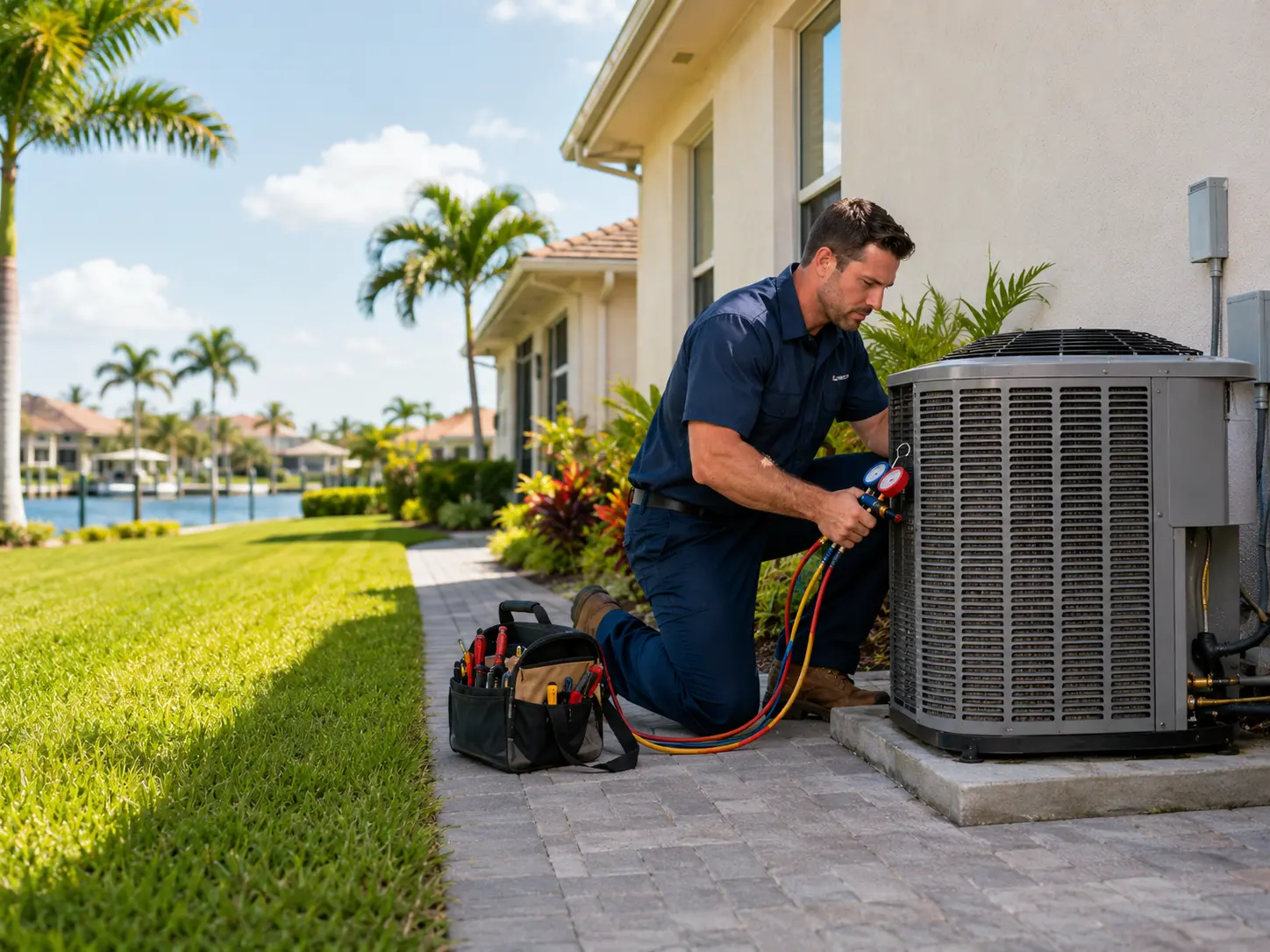
A system that runs but does not cool is one of the most common air conditioning complaints in Cape Coral. The blower is moving air, the outdoor unit may sound normal, and yet the house slowly warms through the day.
The useful distinction is whether the system is producing cold air at all. A supply vent that feels only slightly cooler than the room points in a different direction than a vent producing genuinely cold air that never keeps up with the load.
This page walks through the checks a homeowner can safely make, the mechanical and electrical causes behind weak cooling, and what a diagnostic visit typically covers.
Symptoms and warning signs
- Indoor temperature stays several degrees above the thermostat setting
- Supply air feels barely cool to the hand
- The system runs for hours without cycling off
- One or two rooms stay warm while others are comfortable
- Indoor humidity feels high and the air feels heavy
- The outdoor unit fan runs but the air leaving it is not warm
- Cooling was gradually getting weaker over weeks rather than failing suddenly
- Cooling keeps up in the morning but falls behind in the afternoon
Possible causes
Low refrigerant from a leak
Refrigerant is not consumed in normal operation, so a low charge means a leak. Cooling capacity drops gradually, run times stretch out, and ice may appear near the indoor coil or on the suction line.
Dirty condenser coil
The outdoor coil rejects heat. Landscaping debris, grass clippings, dust and salt film reduce that heat transfer, so the system runs longer and cools less on hot afternoons.
Airflow restriction indoors
A loaded filter, blocked returns, closed supply registers or a dirty evaporator coil all limit the air passing over the coil, which reduces the amount of heat the system can remove.
Failing condenser fan or compressor
A condenser fan that spins slowly, or a compressor that is not pumping efficiently, leaves the system moving air without producing meaningful cooling.
Duct leakage or loss
Ducts that leak into a hot attic deliver less cooled air to rooms and pull warm air into the system, which shows up as uneven temperatures and long run times.
Thermostat or sensor error
A thermostat reading the wrong temperature, or one placed in direct sun or near a supply register, can leave the system running against a target it cannot satisfy correctly.
What a diagnostic visit may involve
- Confirmation of thermostat mode, setpoint and measured indoor temperature
- Filter and return airflow inspection
- Supply and return air temperature measured to establish the temperature split
- Outdoor coil condition and condenser fan operation reviewed
- Electrical readings on the compressor and fan circuits
- Refrigerant-side pressures and line temperatures evaluated when readings suggest a charge or leak problem
- A summary of findings and the repair options that fit them
Repair considerations
- Weak cooling often has more than one contributing factor: a partly restricted filter plus a dirty outdoor coil, for example. Addressing airflow and coil condition can restore noticeable capacity even when no part has failed outright.
- If low refrigerant is confirmed, the leak location matters. Adding refrigerant without addressing the leak returns the same symptom later, which is why leak investigation is discussed as part of the repair options. See refrigerant leak repair.
- Homes with cooling that only falls behind in the late afternoon may be dealing with capacity and load rather than a broken component, and that distinction changes the recommendation.
Why this matters in Cape Coral
In Cape Coral, peak afternoon heat combines with strong solar gain and high humidity, so systems that are slightly compromised often still cool acceptably in the morning and lose ground later in the day. That pattern is a useful clue during diagnosis.
Because so much of a Southwest Florida cooling load is moisture removal, a system that cannot maintain airflow and coil temperature properly leaves homes feeling humid even when the thermostat reading looks close to target.
Related AC issues and services
See every option on the AC services hub or contact us with your details.
Service areas
This service covers Cape Coral, including Pelican, Cape Harbour, Yacht Club. View all service areas.
Frequently asked questions
Why does my AC run all day and never reach the set temperature?
How cold should the air from my vents be?
Can I add refrigerant myself?
Why is one room always warmer?
Should I turn the thermostat lower to catch up?
Describe your AC problem and get help lined up
Call to talk through the symptoms and check current service availability, or send the details through the service request form.