
AC Capacitor Replacement in Cape Coral, FL
Testing and replacement of run capacitors that keep condenser fans and compressors from starting properly.
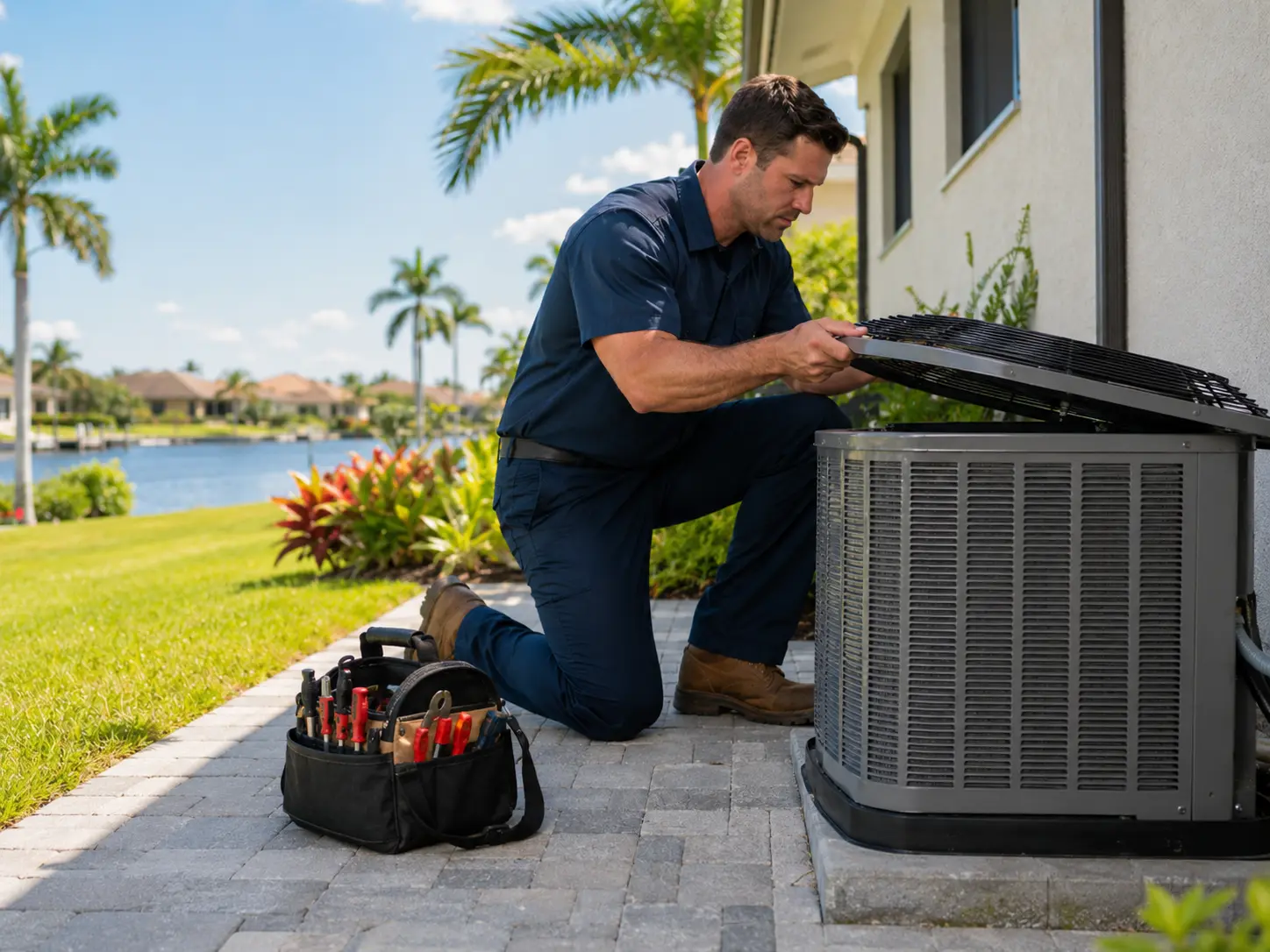
A run capacitor stores and releases energy to help motors start and run efficiently. In residential cooling equipment, one capacitor commonly serves the condenser fan and compressor, and it is among the most frequent causes of a system that suddenly stops cooling.
The classic symptom is an outdoor unit that hums without the fan turning. A capacitor that has drifted below its rated capacitance can also cause hard starts, higher current draw and nuisance thermal cutouts long before it fails completely.
Because a capacitor holds a charge and sits in a live electrical compartment, testing and replacement is work for a technician with the right meter and safety practices.
Symptoms and warning signs
- The outdoor fan does not spin while the unit hums
- The fan starts if nudged, then stops on later cycles
- The compressor tries to start and cuts out on internal protection
- Cooling is intermittent, working some cycles and not others
- A clicking or buzzing sound from the outdoor electrical panel
- The top of the capacitor appears swollen or is leaking
- The indoor blower runs normally while the outdoor unit does nothing useful
- Higher than usual current draw noted during service
Possible causes
Heat exposure
Capacitors degrade faster in sustained high ambient temperatures, and an outdoor electrical compartment in Southwest Florida spends months in exactly those conditions.
Normal electrical aging
Capacitance drifts downward over time with repeated charge and discharge cycles. A part that reads well below its microfarad rating is failing even if it looks intact.
Voltage irregularities
Surges, brownouts and storm-related events stress dielectric material, which can shorten the life of both the capacitor and the motors it supports.
Motor problems increasing load
A fan or compressor motor drawing more current than designed shortens capacitor life. Replacing the capacitor without checking the motor can lead to a repeat failure.
Incorrect replacement part
A capacitor with the wrong microfarad or voltage rating can cause poor starting and early failure, so ratings are matched to the equipment nameplate.
Loose or corroded terminals
Poor connections cause heat at the terminals and erratic operation that can look identical to a failed capacitor.
What a diagnostic visit may involve
- Verification that the thermostat is calling for cooling and power is present at the disconnect
- Safe discharge of the capacitor before any testing
- Capacitance measured and compared against the nameplate rating
- Fan and compressor amp draw checked against rated values
- Contactor and terminal condition inspected for heat damage
- Replacement with a correctly rated part when readings confirm failure
- System operation and temperature split verified after the repair
Repair considerations
- Capacitor replacement is usually one of the quicker cooling repairs, which is why it is worth confirming or ruling out early. Restored cooling on the same visit is a common outcome when the capacitor is the only fault.
- If the fan or compressor motor is also drawing high current, replacing only the capacitor treats a symptom. Motor condition is checked so the same part does not fail again in a few weeks.
- A capacitor that fails during peak season often coincides with the highest run hours of the year, so a system that struggled before the failure may benefit from a broader check of airflow and coil cleanliness. See AC maintenance.
Why this matters in Cape Coral
Outdoor units in Cape Coral operate through long stretches of high heat, and the electrical compartment on a condenser sitting in afternoon sun runs hotter still. Heat is the main enemy of capacitors, which is why they are a frequent failure point locally.
Storm season adds voltage events to the mix. Homes that experience frequent flickers and brief outages may see starting components wear sooner than equipment on a very stable supply.
Related AC issues and services
See every option on the AC services hub or contact us with your details.
Service areas
This service covers Cape Coral, including Pelican, Cape Harbour, Yacht Club. View all service areas.
Frequently asked questions
Can I replace an AC capacitor myself?
How do I know it is the capacitor and not the compressor?
Will a new capacitor fix my cooling completely?
Why did my capacitor fail so soon after the last one?
Is nudging the fan blade a safe temporary fix?
Describe your AC problem and get help lined up
Call to talk through the symptoms and check current service availability, or send the details through the service request form.