
AC Compressor Repair in Cape Coral, FL
Evaluation of compressor symptoms, starting components and the decision between component repair and system replacement.
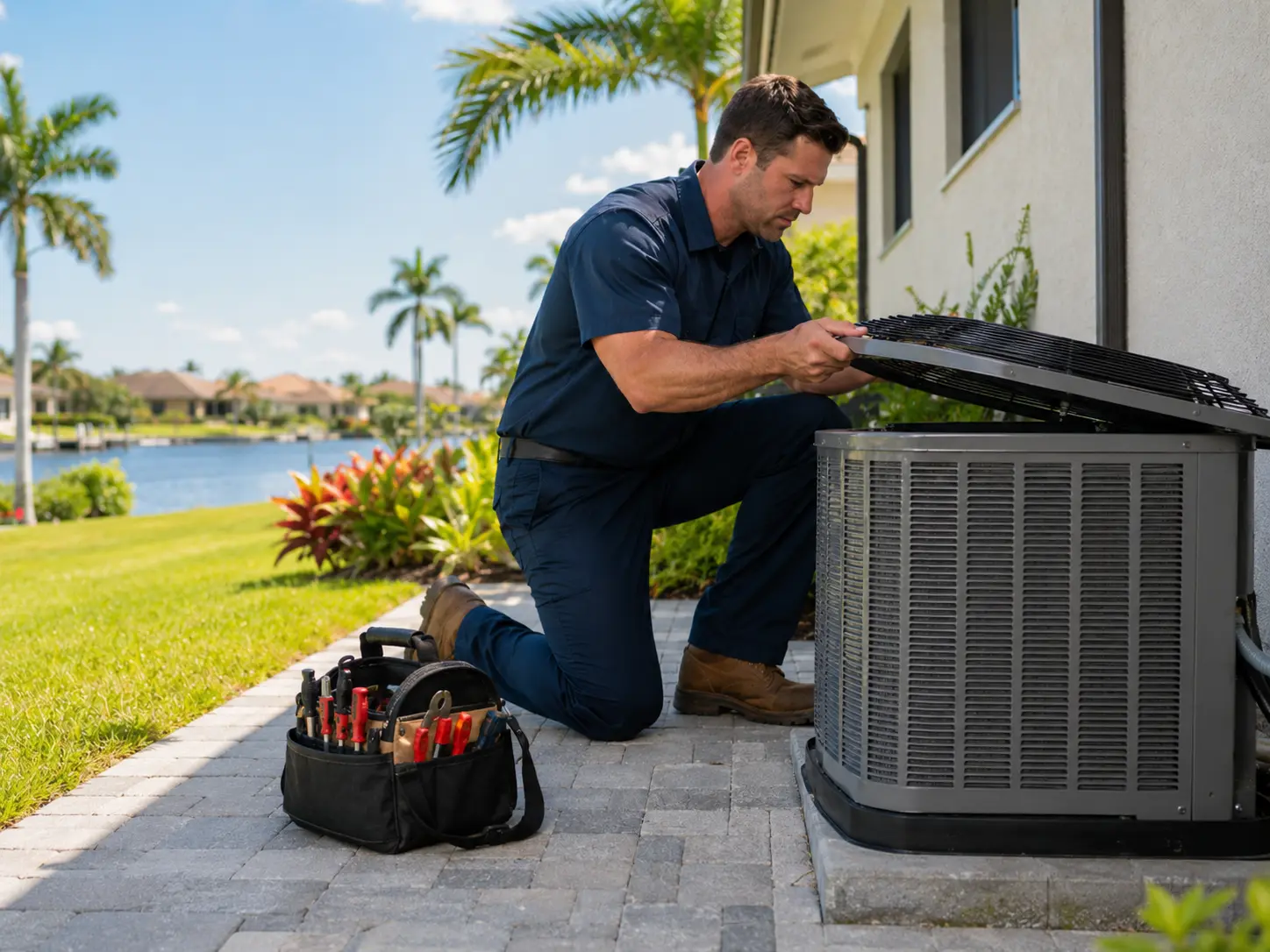
The compressor is the component that moves refrigerant through the system, and it represents the largest single investment in an outdoor unit. Because of that, compressor symptoms deserve careful diagnosis rather than a quick conclusion.
Many complaints that look like compressor failure turn out to be starting components, wiring or control problems. A weak capacitor, a pitted contactor or a failed start relay can all keep a healthy compressor from running.
This page describes the symptoms associated with compressor trouble, what gets measured to confirm it, and how the repair-versus-replacement conversation usually goes when a compressor is genuinely failing.
Symptoms and warning signs
- The outdoor unit hums loudly for a few seconds and then shuts off
- The condenser fan spins but no cooling is produced
- The breaker trips when the outdoor unit tries to start
- A hard clunk or rattling sound at startup
- The system cools intermittently and then locks out for long periods
- Refrigerant lines stay near ambient temperature during a call for cooling
- The outdoor unit becomes noticeably hotter than usual
- Repeated resets are needed to get any cooling at all
Possible causes
Failed run or start capacitor
A capacitor that has lost capacity cannot give the compressor motor the phase shift it needs to start. This produces humming and thermal cutouts that mimic compressor failure but cost far less to correct.
Contactor or relay problems
Burned or welded contacts interrupt power to the compressor or hold it on when it should be off. Contact condition and voltage across the contactor are basic checks in this diagnosis.
Electrical winding failure
Shorted or open motor windings, confirmed by resistance and continuity readings, indicate internal compressor failure rather than a supporting component.
Mechanical failure or valve damage
Internal wear, valve leakage or bearing failure leaves a compressor running without building the pressure difference needed to move heat, so the system runs with little effect.
Overheating and refrigerant issues
Low charge, restricted airflow across the condenser or a blocked metering device can push compressor temperatures and pressures outside safe limits, leading to protective lockouts and, over time, damage.
Voltage supply problems
Persistent low voltage, loose lugs or storm-related surges stress motor windings and starting components, which is one reason electrical supply is checked alongside the compressor itself.
What a diagnostic visit may involve
- Confirmation of what the outdoor unit does when cooling is called for
- Voltage and amp draw measured at the disconnect and at the compressor terminals
- Capacitor capacitance tested against its rating
- Contactor, wiring and terminal condition inspected
- Winding resistance and continuity to ground checked
- System pressures and line temperatures reviewed to judge whether the compressor is pumping
- Findings explained, including whether the fault is a supporting component or the compressor itself
Repair considerations
- When a supporting component is at fault, the repair is comparatively small and cooling can often be restored quickly. Confirming that first avoids replacing a compressor unnecessarily.
- When internal compressor failure is confirmed, system age matters. On newer equipment, compressor replacement may make sense, especially if the system uses current refrigerant. On older equipment, a full comparison with replacement is worth having — the repair vs replace page and AC replacement page cover that discussion.
- Repeated compressor lockouts should not be resolved with repeated resets. Each forced restart under fault conditions adds heat and mechanical stress to the component.
Why this matters in Cape Coral
Long cooling seasons in Cape Coral mean compressors here accumulate run hours faster than equipment in cooler climates. Sustained high outdoor temperatures also raise operating pressures, so anything restricting condenser airflow shows up as extra compressor stress.
Coastal air and irrigation spray can leave film and corrosion on outdoor coils and electrical terminals, which is one reason condenser cleanliness and terminal condition are part of a compressor evaluation here.
Related AC issues and services
See every option on the AC services hub or contact us with your details.
Service areas
This service covers Cape Coral, including Pelican, Cape Harbour, Yacht Club. View all service areas.
Frequently asked questions
Is a humming outdoor unit always a bad compressor?
How long does a compressor last?
Can a compressor be repaired rather than replaced?
Does replacing a compressor fix cooling for good?
Should I keep resetting the breaker to get cooling?
Describe your AC problem and get help lined up
Call to talk through the symptoms and check current service availability, or send the details through the service request form.